

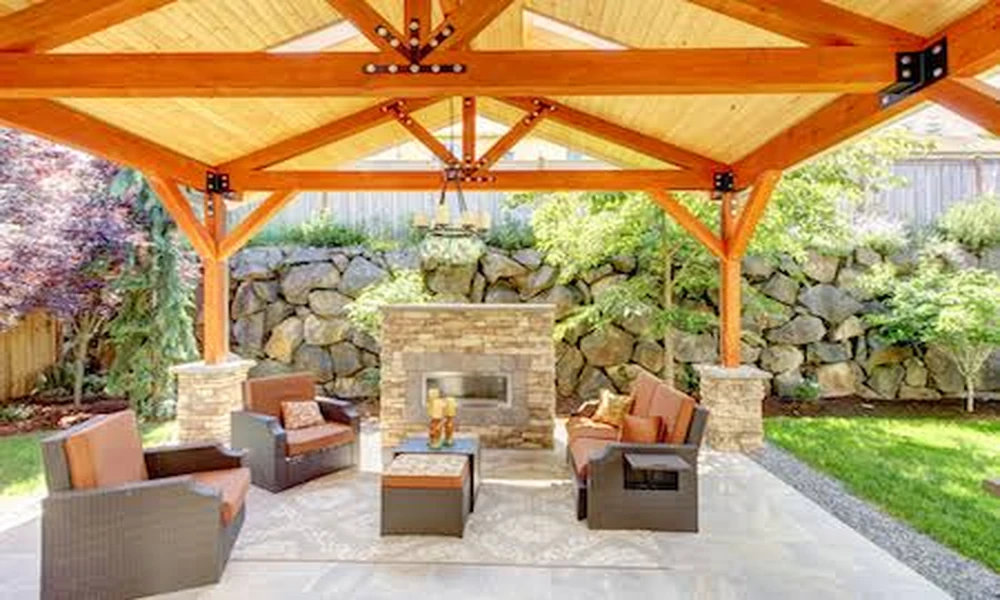
Most homeowners shop for patio covers by price. They should shop by climate first. Pick the wrong cover and you’ve built a beautiful outdoor room that nobody uses between May and October. Pick the right one and that same square footage becomes the most used spot in the house, year-round.
This guide gives you a clear framework for matching the cover type to your actual conditions, your habits, and your home’s architecture. No vague “it depends” answers. By the end, you’ll know exactly what to buy and why.
Why the Phoenix Heat Changes Everything
Hot-climate patio design is its own discipline. The math is brutal. Phoenix recorded a streak of 113 consecutive days when temperatures exceeded 100 degrees Fahrenheit, smashing the previous record of 76 consecutive days set in 1993. That’s nearly four months where your outdoor space is either shaded or abandoned.
This matters for cover selection in two specific ways. First, solar heat gain through an uncovered patio roof bakes the concrete below and radiates back up at you. Second, intense UV exposure degrades certain fabrics and materials much faster than manufacturer timelines assume, because those timelines are usually written for temperate climates.
You can check the National Weather Service Phoenix’s historical record data, which documents annual and monthly temperature extremes going back to 1895, to see just how consistent the heat load is across decades. The pattern doesn’t change. Your cover needs to outlast it.
So before you look at any product, answer two questions: How many months per year do you need shade protection? And do you want that shade to be adjustable or fixed?
The Phoenix Outdoor Comfort Window
Here’s a framework I call the Outdoor Comfort Window. Plot your year into three zones:
- Prime zone (October through April): Mild temps, reliable sun, ideal outdoor use with minimal shade needed.
- Shade-critical zone (May through September): Triple-digit heat makes full overhead shade non-negotiable if you want to use the space at all.
- Transition days (roughly 30 days split across April and October): Morning and late-afternoon use is comfortable, but midday sun is punishing.
Your cover choice should serve all three zones, not just one. A fully fixed solid roof serves the shade-critical zone beautifully but cuts your light and views in October when you actually want them. A retractable system serves all three. That tradeoff is the single biggest decision you’re making.
The Four Cover Types, Ranked for Hot-Climate Performance
Demand for shade features is climbing fast. A 2026 Houzz study reported by Forbes found that shade features were the most requested structural upgrade after decks, at 35% of homeowners, representing a jump of 15 percentage points from 2024. That’s not a trend. That’s a correction. People bought patios and then realized they couldn’t use them. Here’s what actually works:
| Cover Type | Best For | Hot-Climate Rating | Adjustability | Typical Lifespan |
|---|---|---|---|---|
| Retractable Awning | Flexible shade, any exposure | Excellent | Full (motorized or manual) | 10 to 15 years (fabric) |
| Solid Patio Cover (Alumawood) | Full overhead block, permanent feel | Very Good | None | 25+ years |
| Lattice Pergola | Partial shade, aesthetic value | Moderate | None (add-on shades possible) | 20+ years |
| Sail Shade / Tensioned Fabric | Angle-specific shade, lower budget | Fair | Seasonal removal only | 5 to 10 years |
The lattice pergola is the most popular option sold nationwide, and it’s the worst choice for Phoenix-level heat. At high noon in July, a lattice structure provides about 40% shade coverage. The rest of that solar radiation hits you directly. It looks great in a showroom photo. It feels like an oven in practice.
“Homeowners are increasingly motivated to upgrade their outdoor spaces to be more accommodating,” according to the 2026 Houzz Outdoor Spaces Study. The top trigger for upgrades remains deteriorated or broken elements, but comfort-driven spending is rising fast.
The Cover Match Matrix: A Decision Tool You Can Actually Use
Stop guessing. Run through this decision matrix before you call anyone for a quote.
Step 1: Identify your primary exposure. West-facing patios get the worst of the late-afternoon sun, which hits hardest after 2 p.m. when the day has already peaked. South-facing patios need full coverage from 10 a.m. onward. East-facing patios are the most forgiving, needing morning shade only.
Step 2: Decide on permanence. If you want the cover to feel architectural, to add to your home’s structure and resale value, go fixed. If you want to use the full sky in winter and block it in summer, go retractable. There’s no hybrid that fully satisfies both.
Step 3: Account for wind. Phoenix haboobs are real. Any fabric system needs a wind sensor or manual retract habit. Solid covers and alumawood panels handle wind without any action from you.
Step 4: Match the motor to your lifestyle. Motorized retractable awnings run $1,500 to $4,000 more than manual systems, but if you’re unlikely to crank a handle every time a cloud passes, the motor pays for itself in fabric life alone. A retractable system that never gets retracted gets destroyed by wind. That’s the real cost of skipping the motor for someone who travels frequently.
What Shade Does to Your Cooling Bill
This section matters most if you’re on the fence about spending more for a better cover. Shading your home’s sun-exposed surfaces is one of the most direct ways to reduce cooling load. A study published through the U.S. Department of Energy’s Office of Scientific and Technical Information found that total site energy savings for heating and cooling from shading devices was up to approximately 9% for a home with a heat pump and up to 15% for a home with a gas furnace, compared to cases without any shading devices.
In Phoenix, where air conditioning runs nearly year-round, even a 5% reduction in cooling load translates to real dollars over a decade. A quality patio cover isn’t just a comfort purchase. It reduces the hours your HVAC system runs at maximum capacity on a 112-degree afternoon.
If you’re weighing a $3,000 retractable awning against doing nothing, factor in the energy offset. It changes the math considerably.
Fabric and Material Selection for Extreme UV
Generic awning fabrics are rated for UV exposure in temperate climates. Phoenix is not a temperate climate. Look for two things: a solution-dyed acrylic weave (the color is baked into the fiber, not printed on the surface) and a UV rating above UPF 50. Cheap polyester prints fade within two summers at these UV levels. Solution-dyed acrylics from recognized manufacturers hold their color for 10 or more years in desert sun.
For alumawood and solid covers, the finish quality matters more than the base material. Powder-coated aluminum holds up to intense UV and heat cycling far better than painted wood. It doesn’t warp, crack, or require seasonal treatment.
When to Bring in a Professional
DIY patio covers exist, and some of them are decent. But in a climate with 113-degree summers and occasional 60 mph haboob wind gusts, the structural attachment to your home matters. A poorly flashed connection point between a cover and your roofline becomes a water intrusion problem the moment monsoon season hits. Local professionals who understand HOA packet requirements, roofline flashing details, and desert-specific wind loads are worth the extra cost.
Homeowners across the Valley have discovered that Phoenix patio awnings installed by experienced local specialists include proper desert-rated hardware, local permit handling, and motorized wind sensors built to the actual conditions, not a national average.
The cover that performs in Phoenix is one that was designed and installed with Phoenix in mind. A national home improvement chain quoting you the same system they’d sell in Seattle isn’t doing you that favor.
Final Thought
Your outdoor space is only as good as the season it’s usable. In a desert climate, that means shade isn’t optional. It’s the foundation of the whole room. Get the cover right and everything else, the furniture, the lighting, the outdoor kitchen, becomes worth the investment. Get it wrong and you’ve built a very expensive place to store your grill.
What’s the one outdoor project you’d finally tackle if your patio felt comfortable all year long?
