

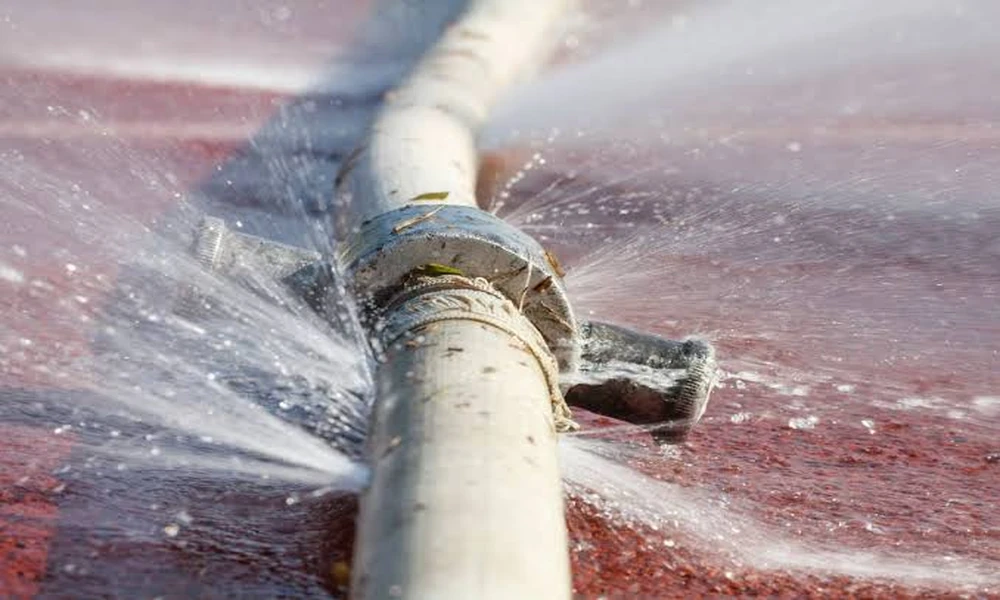
Most homeowners fixate on the repair bill. The plumber’s invoice usually runs a few hundred dollars. The drywall, the soaked insulation, the warped cabinet bases, and the storage unit you rent while the floor gets replaced run into the thousands. The pipe is the cheap part. Everything the pipe ruins is the expensive part.
That gap explains why your first ten minutes matter more than anyone’s hourly rate. The water still in your walls while you read a price list continues to do damage. So this piece covers the three things that actually change your outcome: where these failures start in this climate, how to shut things down before the water spreads, and how to handle the cleanup so a small break doesn’t turn into a mold job. If you need someone dispatched right now, you can arrange burst pipe repair in Albuquerque before you finish the next section, and the rest of this article will still apply once the water is off.
Why this city is harder on pipes than people expect
Ask someone from Minneapolis about frozen lines and they’ll laugh at the idea of a desert problem. They’re wrong, and here’s why. Albuquerque sits at high elevation with dry air and clear nights, and that combination lets heat radiate straight out of exposed materials after sunset. A pipe doesn’t need a week of bitter cold. It needs one long, cloudless night below freezing, and around here that happens plenty between November and March.
Dry air makes it worse in a way most people never consider. Moisture evaporating off damp ground actually pulls warmth out of the soil, which is why a shallow buried line can freeze on a night the thermometer never looks that scary. Homes built on slabs and older houses with uninsulated garage walls carry the most risk. If your washing machine sits against an exterior wall, that supply line is the first thing I’d look at.
My rule for desert cold snaps: treat any forecast below 28 degrees as a plumbing event, not a weather event. Open the cabinet doors under every sink on an exterior wall and let a pencil-thin stream run from the farthest faucet overnight. That trickle costs you a few cents of water and moves just enough volume to keep ice from forming.
The 60-minute first response
Water is already moving when you find the problem, so this is not the moment to weigh options. Work the sequence below in order and skip anything that puts you in standing water near an outlet or a panel.
- Shut off the main. Find the valve where the supply enters the house, usually near the meter or the front foundation wall. Turn it clockwise until it stops. If the handle won’t budge, call the water utility rather than forcing it.
- Kill the power to wet rooms. Flip the breaker for any area where water is touching an outlet, an appliance, or a light fixture. Don’t stand on a wet floor to do it.
- Open faucets. A cold line still holds water. Opening the lowest tap drains pressure and limits how much escapes.
- Document everything. Film a slow walkthrough before anything gets mopped. Insurers care far more about what was wet than what was clean.
- Start moving air. Box fans and every towel you own. The clock is the enemy here.
The bigger threat after a leak is biological, not structural. According to the Environmental Protection Agency, interior mold can begin establishing itself on damp materials in as little as a day or two, which is why drying out beats waiting for an adjuster to call back. Pull wet rugs and cardboard out to the garage. Prop up damp baseboards so air can get behind them. Skip this and a straightforward pipe fix becomes a remediation project with containment plastic and a crew in respirators.
Where the leaks usually hide
I’ve walked enough of these calls to know the pattern. The failures cluster around weak points rather than showing up on random stretches of pipe, and that predictability is genuinely useful when you’re deciding what to insulate first.
| Location | Why it fails | Warning you might notice |
|---|---|---|
| Hose bibs and exterior spigots | Hose left connected traps water that freezes and splits the fitting | No water flow when you open it after a cold night |
| Attic and crawlspace runs | Uninsulated pipe above the ceiling plane | Brown ring on the ceiling below |
| Exterior-wall supply lines | Insulation gaps around penetrations | Low pressure at one fixture only |
| Supply lines under sinks | Cheap braided hoses and failing shutoff valves | Water staining in the cabinet |
A burst pipe rarely announces itself with a bang. A crack in a split fitting can spray a gallon in minutes and stay hidden behind a cabinet back panel for weeks. If the fix gets deferred, the water sitting in the wall cavity keeps soaking the same materials. The Department of Homeland Security recommends shutting off the main supply immediately during a water emergency and calling a licensed plumber rather than drying the area and hoping the line holds. That guidance holds up in practice.
A short checklist that prevents most of these calls
You don’t need special skills for this. You need ten minutes in October and a little awareness in January.
- Disconnect every garden hose before a freeze and drain the spigot.
- Add foam insulation sleeves to any exposed pipe in the crawlspace, the garage, or along the ceiling line.
- Seal gaps around pipe penetrations with expanding foam so cold air can’t pour in through the wall.
- Test every shutoff valve once a year by turning it closed and back open. A valve that’s never been used seizes, and a seized valve can’t save you.
- Know where the main is before you need it. In an emergency, the moment you look for it is the wrong moment.
The valves part deserves a specific mention. A homeowner who knows the main shutoff position and can operate it in the dark is materially better off than one who finds out mid-flood that the handle is stuck.
When to call a plumber instead of grabbing a wrench
A general rule: if the leak is behind drywall, under a slab, or inside a wall cavity, stop. That’s not a weekend job. A burst pipe in those spots needs pressure testing to find the actual break, and sometimes a repair coupling or a partial repipe before it holds. Water hidden in wall cavities can also cause electrical problems, and the same water that swells the drywall can warp flooring and cabinet bases. A licensed plumber can test the system and make a real repair in a fraction of the time you’d spend guessing.
The National Oceanic and Atmospheric Administration tracks the frost and freeze dates that matter most for this climate, and reviewing those ahead of the season tells you more than any calendar reminder. Read the history, then set a reminder anyway.
Protect the cheap part, save the expensive part
Every freeze-pipe call I’ve run follows the same shape: a small split fitting, a large bill, and a homeowner who wishes they’d known where the main shutoff was. The pipe is never the expensive part. The water is. If you take one thing from this, take the six inches of insulation on a spigot: it costs a couple of dollars and prevents a very expensive night. If the water is already moving, turn off the main and call a plumber before you touch a mop. What’s more expensive at your house right now, a shutoff valve you can turn by hand or a drywall bill you can’t?
