

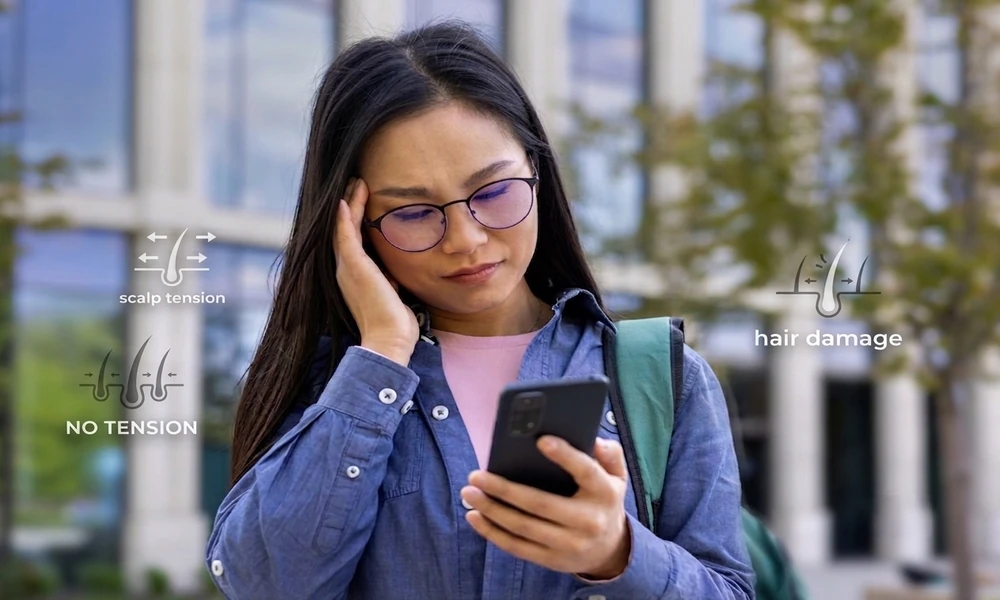
A beautiful extension install should make you feel confident, polished, and comfortable-not sore, stressed, or worried about your edges. Many customers have been taught to believe that a tighter install means the style will last longer, but that idea can create serious problems for the scalp and natural hair. When chemically treated strands are already more delicate, too much pulling can lead to tenderness, breakage, small bumps, headaches, and thinning around the hairline. The goal is not just to achieve a sleek look for the moment, but to protect your hair so it can stay healthy underneath the style. A secure install should feel stable without causing pain, pressure, or a constant pulling sensation.
Tightness Is Not a Sign of a Better Install
Textured and natural hair needs styling methods that respect the scalp, the hairline, and the strength of each strand. When customers chooseRelaxed Hair Extensions, the finished look should blend beautifully with relaxed textures while still feeling light and comfortable from the start. If the style feels painful during the appointment, that is not something to “get used to.” It is a sign that the hair may be under too much tension.
A good stylist understands that relaxed hair often requires gentle handling because chemical processing can make the strands more prone to dryness and snapping. Tight braids, heavy bundles, aggressive sewing, or pulling too close to the scalp can place unnecessary stress on the roots. Even if the style looks smooth at first, that hidden tension may affect the health of your hair over time.
Comfort should always be part of the beauty experience. Your install can still look neat, polished, and long-lasting without being painfully tight. In fact, a more thoughtful installation often wears better because the scalp is not inflamed, irritated, or forced to carry more pressure than it should.
Warning Signs Your Scalp Is Under Too Much Stress
Some customers ignore discomfort because they assume soreness is normal after getting extensions. A little awareness of the scalp is different from sharp pain, throbbing, or a pulling feeling every time you move your head. If you are taking pain relievers just to tolerate a hairstyle, that is a warning sign.
Textured and natural hair communities often talk about protective styling, but a style is only protective when it does not harm the hair underneath. Watch for warning signs such as:
- Pain during or after installation
- Headaches from tight braids, tracks, or sewing
- Scalp tenderness when touching or styling the hair
- Small bumps around the hairline or parting areas
- Itching, redness, or inflammation
- Broken hairs near the edges
- A pulling feeling when sleeping, brushing, or turning your head
These signs should not be brushed off. They may mean the foundation is too tight, the added hair is too heavy, or the style is placing repeated tension on the same areas. The edges are especially delicate, so they should never be forced into a style that pulls them backward or upward for long periods.
Choosing Extensions That Support Hair Health
Textured and natural hair comes in many beautiful forms, and the right extension choice should work with your real texture rather than against it. Customers who love fuller, blown-out looks may compare relaxed textures with options likeBest Kinky straight bundles, especially when they want volume, softness, and a natural-looking finish without forcing their own hair into constant heat styling.
The healthiest choice is not always the heaviest or fullest option. For relaxed strands, weight matters. Too much density can drag on the roots, especially if the natural hair is fine, recently relaxed, or recovering from breakage. A lightweight, well-matched texture can create fullness while reducing the need for excessive flat ironing, tugging, or tight blending.
Before installation, customers should think about the current condition of their hair. Is the scalp calm? Are the edges strong? Is there active shedding, thinning, or breakage? If the hair is already fragile, it may be better to choose a gentler style, reduce the number of bundles, or give the hair a rest before adding extra weight.
What to Tell Your Stylist Before the Install
Your stylist should know if your hair is chemically treated, recently relaxed, thinning, tender, or recovering from damage. This helps them choose a safer foundation and avoid placing too much tension on weaker areas. Speaking up does not make you difficult; it protects your hair.
You can say things like, “Please do not braid my edges tightly,” or “I want the install secure, but not painful.” If you feel discomfort during the process, say something immediately. Waiting until the style is finished may make it harder to adjust without removing part of the install.
A healthy installation should include clean sectioning, gentle foundation braids, careful track placement, and a weight balance that works with your natural density. The stylist should also avoid sewing too tightly or pulling thread with so much force that the scalp feels pinched. Beauty should never require suffering through unnecessary pain.
The Haircare Bottom Line
After installation, your care routine still matters. Keep your scalp clean, moisturize your leave-out as needed, and avoid pulling the hair into tight ponytails or buns every day. Even a comfortable install can become stressful if it is constantly styled with tension.
You should also give your hair breaks between installs. This allows you to cleanse properly, deep condition, check your edges, trim damaged ends if needed, and see how your natural hair is responding. Extensions should be part of a healthy beauty routine, not a way to hide ongoing scalp pain or breakage.
The most important thing to remember is simple: tight does not mean better. A beautiful relaxed-texture style should feel secure, natural, and comfortable. When your scalp feels calm and your hair is not being pulled, you can enjoy your look with more confidence and less worry about long-term damage.
