

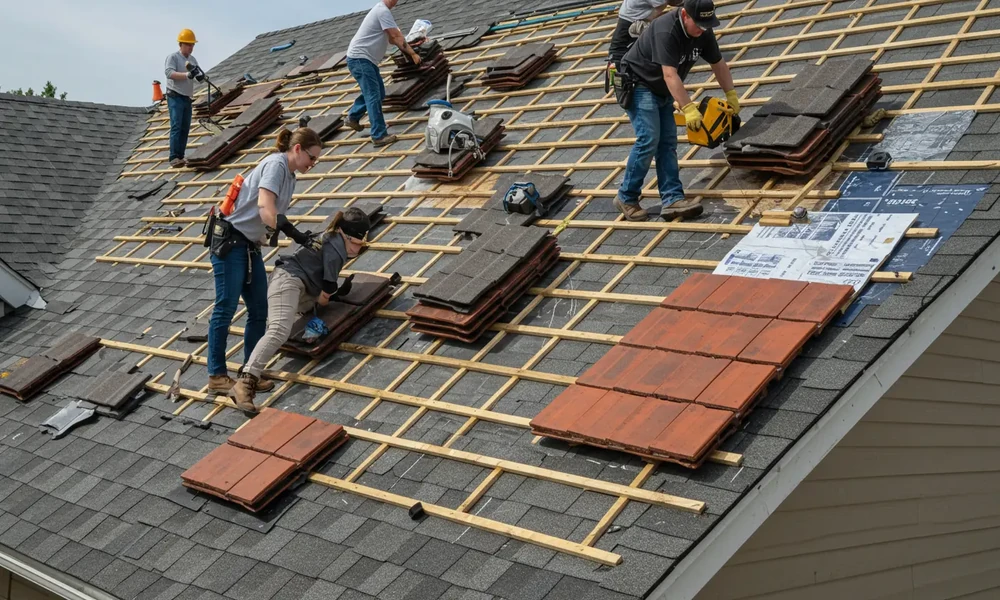
The average asphalt roof replacement runs somewhere between nine thousand and twenty thousand dollars, and most homeowners get that number from a contractor standing in their driveway with a clipboard. That’s a terrible place to learn a price. You’re on your heels, the shingles are curling, and the clock is already ticking.
Roofing isn’t a glamorous purchase, so people put it off until water is dripping into a hallway. If that’s where you are right now, breathe. Plenty of homeowners sort this out in a few weeks without drama, and the ones who do it well tend to hire professional residential roof replacement services after comparing a few real bids rather than grabbing the first truck that drives past. Here’s how to tell a good replacement from an expensive mistake, and how to time it before the sky makes the decision for you.
When should you replace instead of repair?
I’d push you toward repair if the damage is isolated: a few missing shingles after a windstorm, one stubborn leak around a chimney, granule loss in a single section. Save the big money for a roof that’s actually finished.
Replacement usually wins in four situations. Your shingles are past their service life and curling at the edges. You’re facing a second or third patch job in as many years. Storm damage has compromised the decking underneath. Or you’re selling the house and the inspector already flagged the roof in writing.
Here’s the honest part most contractors won’t say out loud: replacing a roof that has five good years left is often a waste. If a roofer tells you the whole thing has to go without showing you photos of the damage, get a second opinion. A ten minute walk across your own lawn can tell you a lot about how honest the first bid really is.
What drives the cost of residential roof replacement services
Price isn’t random, even though it feels that way when two bids land four thousand dollars apart. Five things move the number the most: square footage, roof pitch, the number of layers already up there, the material you pick, and how easy the house is to access. A steep two story with three dormers costs more to cover than a simple ranch, and that’s before anyone opens a shingle bundle.
Material choice does heavy lifting too. Asphalt shingles sit at the budget end. Metal, tile, and slate climb from there, and the labor climbs right along with them because heavy materials need stronger framing and more careful hands.
| Material | Relative cost | What you get |
|---|---|---|
| Asphalt shingles | Lowest | Widest installer pool, solid value, shorter lifespan |
| Standing seam metal | Mid to high | Long service life, handles snow and heat well |
| Tile or slate | Highest | Decades of wear, heavy framing required, few installers |
One more cost you shouldn’t skip: the decking under the shingles. I’ve watched crews peel back old layers and find soft plywood that crumbled at a touch, and suddenly the estimate grew. Budget a contingency cushion of ten to fifteen percent and you’ll sleep better when the surprises show up.
How long does a roof replacement take?
Most single family homes get a full tear off and new roof in one to three days. Weather is the wild card. According to the National Weather Service, severe storms can develop fast enough that scheduling around the forecast matters more than most homeowners expect, and a good crew will build a rain day into the plan instead of scrambling.
You should also plan for the noise. Tear off day sounds like someone dragging furniture across your ceiling for eight straight hours. Move the breakables off the wall, park the cars in the street, and keep the dog somewhere calmer than the living room.
The Three Quote Rule
Here’s the framework I’d hand every homeowner before they call anybody. Get three written quotes, spread across at least two weeks, and evaluate them side by side on the same page. Not three phone calls. Three documents.
Each quote should list the same five lines: tear off and disposal, underlayment and ice barrier, decking repair allowance, ventilation, and the total with tax. If a bid is missing two of those lines, that’s your answer about how the job will go. Compare the middle number as much as the bottom one, because a suspiciously cheap quote usually hides a change order waiting to ambush you.
On my last replacement, the cheapest bid came from a company that wanted a third of the money up front in cash. The middle bid included a written decking allowance and a five year workmanship warranty. We went with the middle one. It wasn’t close.
Red flags to catch before you sign
Most roofing horror stories start with a contract nobody read carefully. Watch for a few patterns.
- Requests for full payment before materials hit your driveway.
- No physical business address, only a phone number and a magnetic sign on a truck.
- Pressure to sign today because the price “expires this afternoon.”
- Workers without fall protection on a steep pitch.
That last one isn’t just about insurance headaches. Roofing remains one of the more dangerous trades in construction, and the Occupational Safety and Health Administration treats fall hazards as a leading cause of fatalities on job sites. A crew that skips harnesses and toe boards is a crew that’s cutting other corners you can’t see from the ground. Ask to see a certificate of insurance for both liability and workers’ compensation, and call the number on it to confirm it’s active.
Materials, ventilation, and the stuff you don’t see
The shingles get all the attention, but the attic does the quiet work. Proper intake and exhaust ventilation keeps the deck cool and dry, and it’s the difference between a roof that lasts its full service life and one that cooks from underneath. If your old roof had ice dams, the fix usually lives in the attic, not on top of it.
Modern shingles and underlayments also handle heat and moisture differently than the products from two decades ago. The Environmental Protection Agency notes that reflective roofing surfaces can help reduce heat absorbed by a home, a small detail that pays back slowly during a hot summer stretch.
Ask your contractor one pointed question: what’s the ventilation plan? If the answer is vague, keep shopping.
What happens after the last shingle goes down
A finished roof should come with a walkthrough, a cleanup, and a warranty packet you actually file somewhere you’ll remember. Take photos of the finished job yourself, including the flashing around chimneys and skylights, because those are the spots that fail first. Keep the paperwork with your home records. Future you, and any future buyer, will thank you for it.
Replacing a roof isn’t fun. But getting it right once beats paying for it twice, and the homeowners who slow down long enough to compare real bids usually end up with a roof they don’t think about for the next two decades. Which of those two paths sounds more like your next month?
