

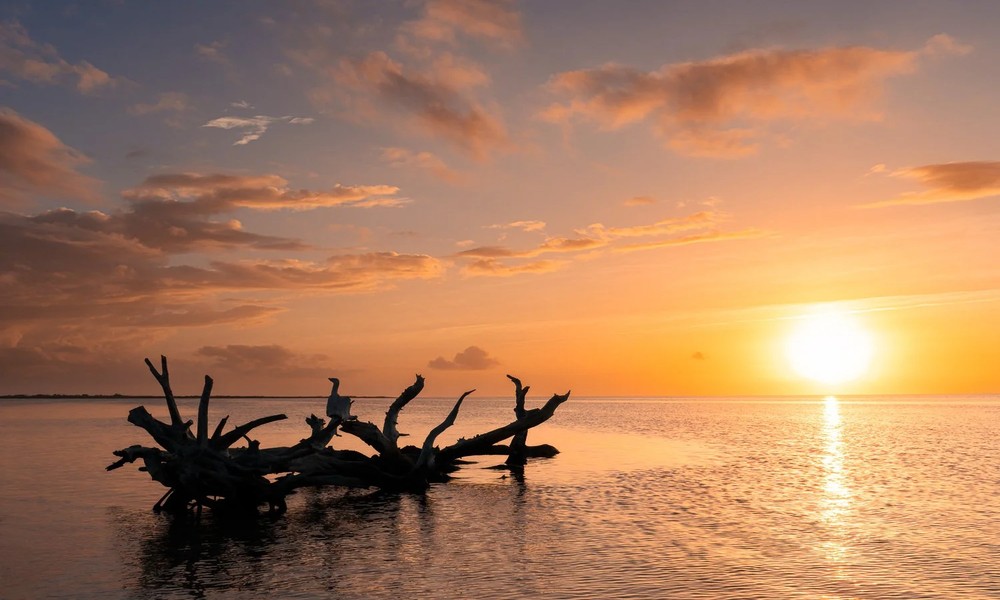
Few subjects reward a patient photographer like a sunset over open water. The sky changes minute by minute. The light bounces off the surface in ways you can never quite predict. Whether you’re shooting from a balcony at sea or a quiet stretch of beach, capturing the moment well takes more than just pointing and clicking.
The good news is that you don’t need expensive equipment to take frame-worthy shots. What you do need is a willingness to slow down and pay attention to the light well before the sun starts dropping toward the horizon.
Choose the Right Gear for the Moment
You can shoot a stunning sunset with anything from a phone to a professional camera. Each tool has strengths to lean into.
Modern smartphones are remarkable at capturing high-contrast scenes. They handle the wide dynamic range of a sunset surprisingly well, especially in their automatic high-dynamic-range modes. The trick with a phone is to tap on the brightest part of the sky to lock exposure there. That move keeps the colors rich rather than washed out.
A mirrorless or DSLR camera gives you more control over the final image. The ability to shoot in RAW format means you can recover detail in shadow areas or bring down highlights that would otherwise blow out. If you have one of these cameras, bring a small tripod for the lowest-light part of the evening.
Camera Settings Worth Knowing
If you’re shooting with a manual camera, a few baseline settings work well for most sunset scenes. Start with a low ISO around 100 to 200 for the cleanest possible image. Use a small aperture between f/8 and f/11 to keep both foreground and horizon in sharp focus. Adjust shutter speed to balance the exposure rather than messing with ISO.
White balance matters too. Try the cloudy or shade setting to warm the colors up. The camera’s automatic white balance often tries to neutralize the orange and pink tones that make a sunset feel special. Shooting in RAW lets you adjust white balance after the fact without losing image quality.
A Note for Travelers at Sea
Photographers who book European cruises quickly learn that some of the best sunset opportunities happen right from the ship’s deck. The Mediterranean offers evenings where the sky burns orange against limestone cliffs or distant islands. The trick is to know when to head outside. Most cruise stewards can tell you exactly what time sunset will fall. Many ships post the times on the daily schedule that gets delivered to your stateroom.
If you’re shooting from a moving ship, lean against a railing or another stable surface. Bracing yourself helps eliminate the small movements that can blur a shot at slower shutter speeds. The ship’s motion makes long-exposure shots harder than they are on land, so plan for slightly faster shutter speeds than you might use on a beach.
Composition Makes the Difference
The classic mistake is to put the horizon in the dead center of the frame. Try placing it in the lower third instead to give the sky room to breathe. If the water’s surface has interesting reflection or detail, flip the rule and put the horizon in the upper third.
Foreground elements give a sunset shot depth and a sense of place. A silhouette of a person on the beach. A weathered dock post poking out of the water. A small boat slipping across the frame. These details transform a generic sky shot into a real photograph that holds the viewer’s eye.
The rule of thirds also applies to where you place the sun itself. A sun positioned slightly off-center tends to feel more dynamic than one parked in the middle of the frame.
Wait for the Best Light
The minutes around sunset offer more than one window of good light. The first window comes about half an hour before sunset, when colors deepen and shadows stretch long. The actual sunset is dramatic but quick. The third window is sometimes the best of all. The fifteen to twenty minutes after the sun dips below the horizon often produce the richest pinks and purples in the sky.
This after-sunset glow is called the blue hour or the second sunset. Stick around for it. Many photographers pack up too early and miss the best frame of the night.
Stabilize Your Shot
As the light fades, shutter speeds get longer to compensate. Once you’re below about 1/60 of a second, handheld shots tend to blur. A small tripod or even a stable surface like a wall solves the problem. If you don’t have a tripod, brace your elbows against your body and take a breath before pressing the shutter.
Most cameras have a self-timer mode that fires the shutter two seconds after you press the button. Use it to eliminate the tiny vibration caused by your finger touching the camera. The technique works wonders for low-light shots.
Working With Reflections
Water acts like a mirror at the right angle, doubling the impact of a colorful sky. Reflections are at their cleanest when the water is glassy and the wind has died down. The hour just before sunset is often the best time to find that kind of calm.
A polarizing filter can deepen the saturation of both sky and water. It does cut down some of the reflection though, so rotate the filter to find the look you want. Sometimes the reflection is the picture rather than the sky above it.
After the Shutter Clicks
A little post-processing brings a sunset photo to life. Most modern phones and computers come with built-in tools that handle the basics. Start by adjusting the white balance toward warmer tones if needed. Lift the shadows to recover detail in dark foreground areas. Pull down the highlights to bring back the texture of clouds near the sun.
Don’t overdo it. Sunsets already have plenty of color, and pushing the saturation too high quickly looks artificial. A gentle touch is almost always better than a heavy hand on the editing sliders.
Common Mistakes to Avoid
Skip the urge to use flash. A flash will light up whatever is right in front of you and do nothing for the distant sky. Avoid zooming in too tight. Sunsets benefit from a wider lens that captures both the sky and a sense of the surrounding scene. Be careful with autofocus too. Cameras often hunt in low light or focus on the wrong part of the frame. Switch to manual focus if your camera struggles to lock on.
A Final Thought
The best sunset photo isn’t always the one with the most dramatic color. Sometimes it’s the one with the boat passing by at exactly the right moment or the family member silhouetted softly along the rail. Pay attention to what’s happening around you, not just to the sky. The story is what turns a pretty picture into one worth printing and framing when you get home.
