

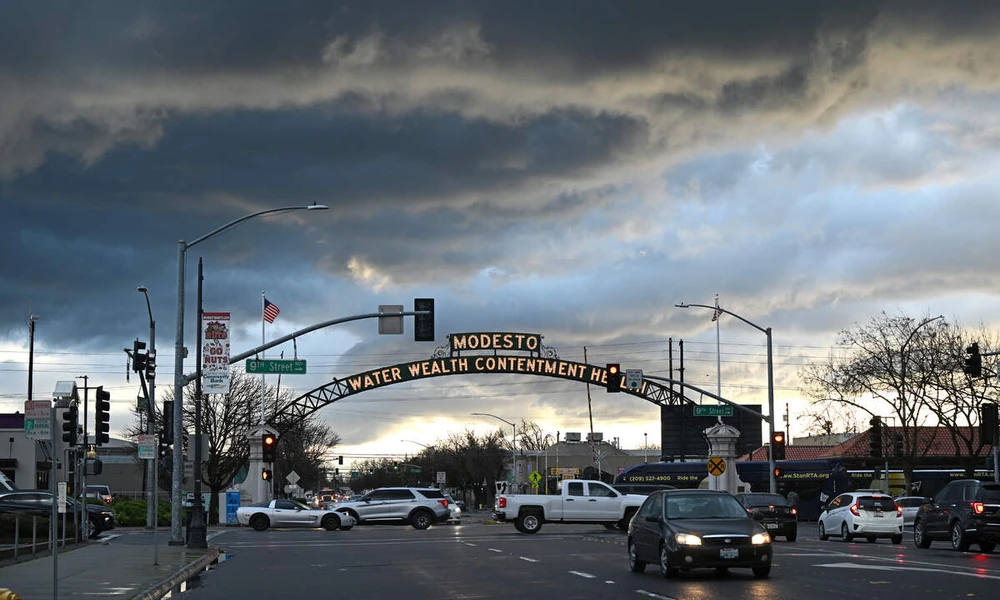
Most people who move to the Central Valley already know summers get hot. But the full picture is actually more striking than “hot.” Modesto averages 260 sunny days per year, compared to the U.S. average of just 205, according to Best Places data. That’s nearly a full extra month of sun over the national norm, year after year. The question worth asking isn’t whether you have good weather. It’s whether your backyard is set up to handle it.
What Modesto’s Climate Actually Looks Like Month by Month
The honest answer: it depends heavily on which month you’re talking about. Modesto’s climate runs on two very different gears. From November through February, temperatures are mild and rain comes in short bursts, with January averaging around 6.76 hours of sunshine per day. From June through September, the city flips into a different mode entirely.
July is a very hot month in Modesto, with temperatures averaging a high of 97.7°F and a low of 62.1°F. August and September aren’t far behind. Across the full year, Modesto logs approximately 3,629 hours of sunshine , according to climate-data.org’s 2024 Modesto climate profile. That’s a significant number for a city that’s often treated as a pass-through on the way to the Bay Area.
The implication for homeowners is real. Summer in Modesto isn’t just “warm.” Peak afternoons routinely push triple digits, which makes an unshaded backyard practically unusable for weeks at a stretch. You have an enormous gift of sunshine and a sharp limit on how comfortable it is to actually be in it without some kind of overhead protection.
| Month | Avg. High (°F) | Avg. Sunshine Hours/Day | Backyard Usability |
|---|---|---|---|
| January | 56°F | 6.8 hrs | Comfortable but short days |
| March | 65°F | 8.5 hrs | Excellent – peak outdoor season starts |
| June | 91°F | 12.9 hrs | Shade required for afternoon use |
| July | 97.7°F | 13.5 hrs | Covered space only for midday comfort |
| August | 95°F | 13.2 hrs | Covered space only for midday comfort |
| October | 78°F | 10.1 hrs | Ideal – warm, manageable sun, low humidity |
The table above is what I’d call the Modesto Outdoor Usability Framework: a way to see your own backyard’s practical calendar at a glance. March through May and September through November are genuinely comfortable without additional shade. June, July, and August are where most homeowners lose access to their own outdoor space, not because the weather is bad, but because they haven’t planned for it.
Why Covered Outdoor Spaces Are Having a Moment Nationally
Modesto’s climate is a local reason to think about backyard structure. But there’s also a national shift in how homeowners are treating outdoor space in general.
The pergolas and patio cover segment dominated the U.S. outdoor living structures market with the largest revenue share of 63.6% in 2024, primarily driven by low maintenance and durability , according to Grand View Research’s 2025 U.S. Outdoor Living Structures Market Report. Patio covers aren’t a luxury add-on anymore. They’re the most popular structural choice in the category.
Part of that is cultural. Part of it is practical. Homeowners who’ve spent money on outdoor furniture, grills, and landscaping don’t want that investment sitting under direct sun for nine months of the year fading and warping. A covered structure protects the whole setup and, frankly, makes the space worth using.
“Improving aesthetics, enhancing entertainment space, and extending the living space of their homes are the top three reasons homeowners renovate their outdoor spaces,” according to the 2025 Houzz U.S. Landscape Trends Study. Those three drivers aren’t separate goals. A well-designed patio cover hits all three at once.
The Actual Options: Matching Cover Style to Your Situation
Not every backyard is the same, and neither is every patio cover. The choice between cover types matters more than most people realize before they start the project. Here’s a quick breakdown of what’s actually available and when each makes sense for a Modesto home specifically.
Solid insulated covers are the right call for homeowners who want to use their patio from 10 a.m. through dinner. They block the full sun load and, if insulated correctly, prevent the underside from radiating heat back down at you. In a city that sees afternoon highs above 95°F for multiple consecutive months, that matters.
Lattice covers are the lighter-touch option. They filter light rather than block it, which works beautifully in spring and fall when the sun is at a lower angle and you actually want some warmth. They struggle in peak July because filtered sun at 98°F is still 98°F.
Louvered covers split the difference. Adjustable louvers let you dial in light and shade by rotating the slats, so you can open them up on a mild October morning and close them against a brutal August afternoon. The tradeoff is cost and mechanical complexity versus a fixed roof.
Choosing between these isn’t just about preference. It’s about your backyard orientation, your existing roof line, what HOA rules might apply, and what activities you actually want to do out there. That’s exactly the kind of conversation worth having with a Patio Cover Builder in Modesto, CA who knows local code, local sun angles, and how structures hold up through a Central Valley summer.
What This Does for Your Home’s Value
Outdoor improvements aren’t purely about enjoyment, though that’s reason enough. If homeowners were to remodel, 63% said they would prioritize investing in an outdoor living space, according to a Brown Jordan Outdoor Kitchens study cited in This Old House’s 2025 Outdoor Living Trends report. That preference signal matters in a real estate context because buyers tend to value what they themselves would have chosen.
A patio cover also does something a kitchen remodel doesn’t: it adds genuinely usable square footage that most appraisers and buyers recognize. A shaded, furnished, functional outdoor room feels like part of the house, especially in a climate like Modesto’s where you can realistically use it nine or ten months out of the year with the right infrastructure. That usable outdoor calendar is a selling point in a way that an unshaded concrete slab simply isn’t.
The category of homeowner who benefits most here isn’t the person who’s already planning to sell. It’s the one who bought in Modesto because they love the area, wants to enjoy their backyard right now, and wants the work they’re putting into it to pay off long-term if they ever do move. That’s most homeowners, which is probably why covered patio projects keep growing year over year.
Your Action Plan for This Season
If you’re sitting on 260 sunny days a year and not using most of them because your backyard is a heat trap, here’s a four-step way to move from recognizing the problem to actually fixing it.
- Map your sun exposure. Stand in your backyard at noon in June and again at 4 p.m. Watch where the shade from your roofline falls and where it doesn’t. That tells you the minimum coverage area you need.
- Decide on your primary use case. Dining, lounging, outdoor cooking, and kids’ play space all have different structural requirements. Pick the one that drives your design, and let the others follow.
- Check your HOA and local permit requirements early. In Stanislaus County, patio covers typically require a building permit. Getting a contractor who handles permitting for you is worth far more than any small savings from skipping the process.
- Get your estimate before summer peaks. Contractors in high-demand regions like the Central Valley book up fast as temperatures rise. If you want the cover in place before July, start the conversation in late winter or early spring.
Modesto’s weather is genuinely one of its underappreciated assets. The city has more sunny days than almost anywhere in California outside the far south, with the bonus of cool evenings that make spring and fall nearly perfect. Setting up your outdoor space to handle all of that, including the punishing midsummer stretch, is less a renovation decision than a lifestyle one. Your backyard should work for you in every month you’re paying a mortgage on it.
