

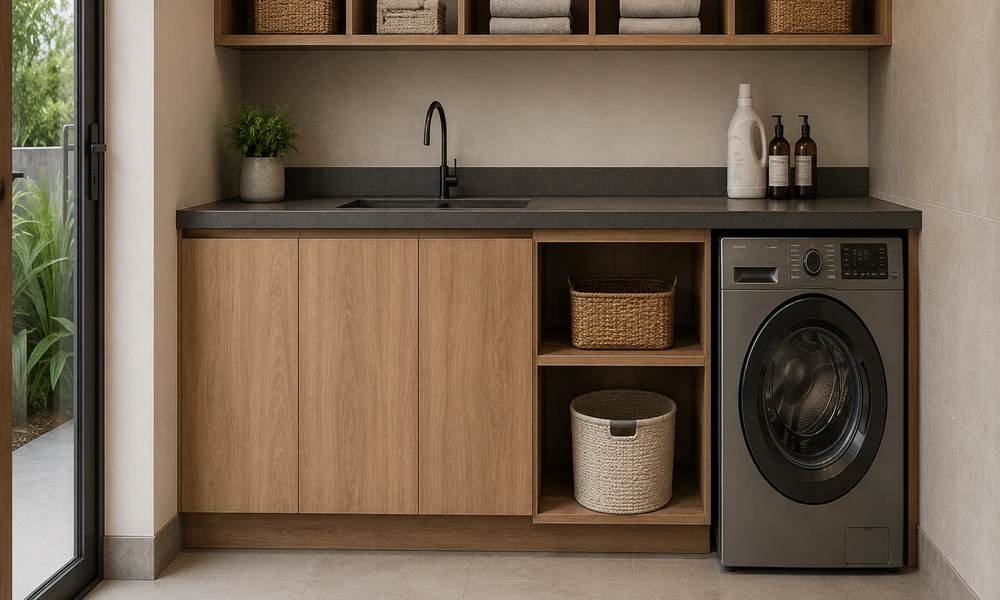
Utility areas are some of the most used areas of a house and experience conditions difficult for furniture and other materials. That said, washing areas, laundry rooms, utility rooms, storage areas, and areas around water supply may encounter humidity, water splashes, leaks, and cleaning procedures. Thus, the choice of plywood material is particularly important for strength and long-term usage.
Understand the Utility Area Conditions
When considering plywood use, it is important to define the exact conditions where the plywood is to be installed. It should be noted that not every utility area has the same level of moisture; for example, the well-ventilated pantry stays dry, while the washing machine area, sink, or other sources of water may constantly have water.
This fact allows determining the necessity of waterproof plywood.
Why Waterproof Plywood Can Be Useful
Waterproof plywood is more resistant to moisture than plywood intended for dry interiors, and as a result, it is a practical variant for utility areas where furniture will encounter splashes, moisture, or damp conditions.
It can be applied in cupboards, shelves, cabinets, and other furniture used in areas where there is a probability of getting wet. What is more, it is necessary to pay attention during the process of installation.
Choose the Right Thickness
The choice of thickness is to be made depending on the size, construction, structure type of furniture, and expected weight of the furniture. Utility cupboards can be designed to store cleaning products, tools, containers, or equipment; thus, the right amount of structural support is significant. When considering the thickness of plywood, lighter applications may call for thinner plywood, whereas heavier applications may need thicker plywood. However, the final decision should take the furniture design into account.
Check the Core Construction
Aspects of the core construction of the plywood also play a crucial role in its performance. If the plywood has appropriately glued veneer sheets, it can help in providing stability and strength during cutting, drilling, screwing, or using the furniture regularly.
The first thing to look for before buying plywood is whether its edges have unsightly gaps or dangling layers, as well as whether the construction is smooth. A strong core construction helps to eliminate weak spots in the plywood.
Protect Exposed Edges
Even waterproof plywood should be given proper thought and effort when it comes to the edges and open parts of the cut pieces. The furniture used in utility zones can feature openings for screws, pipes, electricity, plumbing appliances, and hinges, which can allow moisture to penetrate through these openings.
Thus, sealing the opened areas properly helps to prevent moisture from coming inside or through some sharp edges. Pay special attention to the spaces around sinks, washing machines, drainage pipes, etc.
Consider Surface Finish
The finish of the plywood should match the environment and maintenance needs. Laminates, paints, and veneers are good enough to achieve both looks and protection.
A perfectly smooth surface of the plywood simplifies finishing. It is also important that the applied finish copes with regular cleaning and moisture.
Plan for Ventilation
Proper ventilation significantly contributes to the protection of furniture and fittings from moisture. The laminated plywood can deliver good performance in conditions of enclosed moist areas, where moisture may accumulate for a long time.
Good ventilation around washing machines, sinks, walls, and other moisture-generating appliances makes it easy to ensure a reasonably dry space.
Select Plywood According to Application
Choosing the right plywood depends on the specific conditions and requirements of the utility area. For example, a cabinet placed near a sink requires more effective moisture resistance compared to plywood used in other types of utility furniture.
In this case, it’s advised to use waterproof plywood of Royale Touche within utility areas. Nevertheless, it must comply with the required thickness, manufacturing grade, and purpose.
Installation and Maintenance Matter
The success of using plywood correctly depends on how carefully it will be installed. Measurements, proper fasteners, proper spacing, joint construction, and finishing are the basic aspects to be taken into consideration during the process.
The same degree of importance must be given to maintenance. Spills must be promptly wiped off with water, leaks must be fixed in a timely manner, and all surfaces’ conditions must be regularly checked.
Avoid Unnecessary Water Exposure
Water-resistant plywood may not be harmed by water; however, this does not mean it must be exposed to standing water or continuous moisture exposure. Proper drainage and sealing practices must work the same way as with nicely laminated plywood to ensure good durability.
Conclusion
Waterproof plywood can be a great solution for utility zones where furniture may get wet from time to time or needs to be cleaned regularly. To enjoy the great look of the utility units, special care must be taken to ensure the right choice of plywood, installation, maintenance, and usage methods.
