

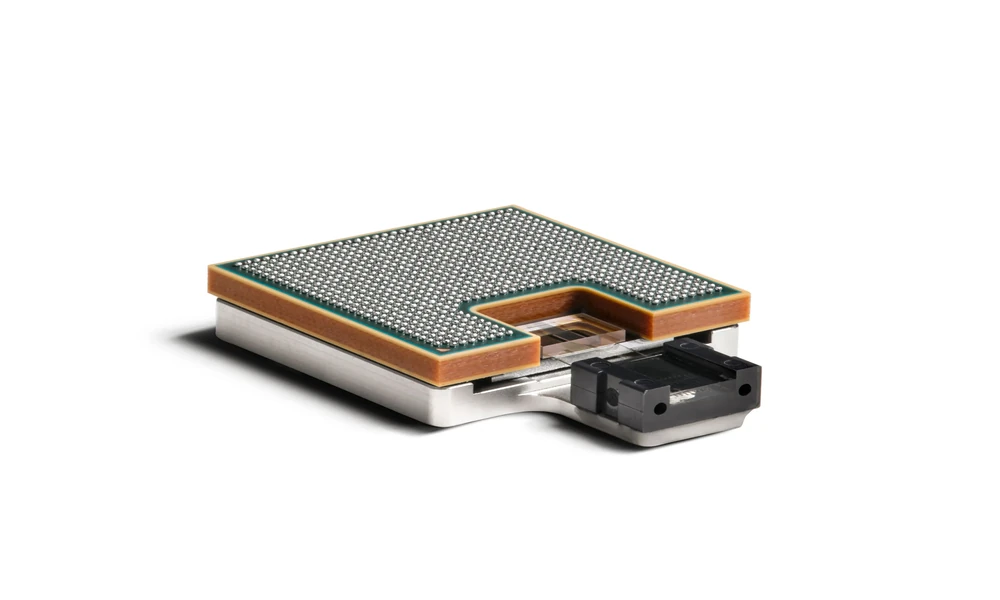
Copackaged optics is the integration of optical transceivers directly onto the switch or ASIC package, placing the optical conversion as close as possible to the silicon rather than housing it in pluggable modules at the front panel of a network switch. The technology addresses a fundamental limitation of high-speed data centre networking: at the data rates that modern AI training clusters and cloud computing infrastructure require, the electrical traces carrying signals between the switch ASIC and the front-panel optical modules become the bottleneck. Copackaged optics eliminates much of that electrical path by integrating the optics into the package itself.
Why Copackaged Optics Matters for Data Centre Networks
As network switching speeds have progressed from 100 gigabits per second to 400Gbps and now to 800Gbps and beyond, the electrical signalling between the switch chip and external optical modules has become increasingly difficult to implement. High-frequency electrical signals on circuit boards lose power over distance through resistive and dielectric losses, and managing signal integrity at the relevant frequencies requires careful design that adds cost and complexity.
The industry’s response has been to shorten the electrical path. Pluggable transceiver modules moved from the line card to the front panel; active electrical cables moved optics slightly closer; and now co-packaged optics moves the optical conversion onto the switch package itself. Each step shortens the high-frequency electrical path and reduces the power consumed by the signalling.
The power consumption reduction is significant at the scale of a data centre. Electrical serialiser-deserialiser (SerDes) circuits that drive signals between chip and optical module consume substantial power; eliminating long electrical paths reduces that consumption. For hyperscale operators, the aggregate power saving across tens of thousands of switches is a material operational cost reduction.
Precision Manufacturing for Copackaged Optics
The components of a copackaged optics assembly are manufactured to tolerances that are extreme even by semiconductor packaging standards. The optical alignment between the photonic integrated circuits, the lensing elements, and the optical fibre coupling must be maintained to within microns to achieve the optical insertion loss budgets that the link budget allows.
Precision manufacturing for copackaged optics components covers photonic integrated circuit packaging, precision-formed optical coupling elements, hermetic package fabrication, and assembly operations that maintain optical alignment throughout the build and the thermal cycling the package will experience in service.
“Singapore’s precision manufacturing base is uniquely positioned to serve the next generation of high-speed connectivity infrastructure,” said EDB managing director Jacqueline Poh at a semiconductor industry event. Manufacturing copackaged optics components to the tolerances the technology requires is a direct demonstration of that capability.
Thermal Management in Copackaged Optics
Copackaged optics assemblies must manage the heat generated by both the switch ASIC and the optical components within a single package structure. The thermal design of the package and the materials used for heat spreading within it are critical to maintaining the operating temperature of both the switch silicon and the photonic components within their specified ranges.
Precision thermal management components in copper or copper alloys, produced to the tight tolerances required for reliable thermal contact, are part of the manufacturing scope for copackaged optics assemblies.
AMT Copackaged Optics Manufacturing
AMT provides precision manufacturing for copackaged optics and related photonic packaging applications. Their metal injection molding, precision machining, and assembly capabilities support the production of precision structural, thermal management, and alignment components for next-generation optical interconnect assemblies in the data centre and telecommunications infrastructure markets.
